The Conversation (0)

(TheNewswire)
 | |||||||||
 |  |  |  | ||||||
GRANDE PRAIRIE, ALBERTA - TheNewswire - (October 13, 2026): Angkor Resources Corp. (TSXV: ANK,OTC:ANKOF OTCQB: ANKOF) ("ANGKOR" OR "THE COMPANY") reports the results of a scientific study of drill core from the Thmei North ("TN") target on its Andong Bor mineral exploration license in northwest Cambodia. The study, carried out by the Economic Geology Laboratory at Kyushu University in Fukuoka, Japan together with the Institute of Technology of Cambodia ("ITC") in Phnom Penh, Cambodia, found that the alteration and mineralization at TN show the characteristics of a porphyry copper-molybdenum system — the type of deposit that supplies most of the world's copper — and indicate potential for a porphyry copper-molybdenum deposit. The study also identifies which parts of the system are most favorable for copper.
The findings are consistent with the modified copper porphyry model the Company is using to guide the TN drill program (see Angkor Resources DRILLS INITIAL PROGRAM AT ANDONG BOR COPPER-GOLD TARGET, CAMBODIA - Angkor Resources Corp), in which the best mineralization is found within potassic-altered sediments adjacent to feldspar porphyry diorite dikes. The study likewise identifies the potassic zone as the main copper zone, and the baked sedimentary rock (hornfels) as a favorable host. It gives the exploration team a clearer guide for placing the remaining 1,700 meters of drilling planned in early 2027.
Dennis Ouellette, VP Exploration, comments: "This study supports what we have been seeing in the core. The copper is in the potassic and chlorite-sericite alteration, while the phyllic zone near the top appears to lack it. That tells us where to aim the next phase of drilling at Thmei North."
STUDY AT A GLANCE
Porphyry-style alteration: the rocks at TN show three types of alteration — chemical changes made to rock by hot fluids — stacked in the pattern typical of a copper porphyry system.
Copper located: copper minerals are mainly found in the deeper potassic zone (formed by the earliest, hottest fluids) and the chlorite-sericite zone above it. The upper phyllic zone appears to lack mineralization.
Molybdenum identified: molybdenite, the main ore mineral of molybdenum, was identified in the core within the copper-bearing zone.
Fluid temperatures: fluids from the main copper-bearing veins were measured at 300 to 415 °C, and the study found signs that the early fluids were carrying dissolved metal.
Boiling fluids: the study found evidence that the fluids boiled as they rose and the pressure dropped — a process commonly associated with the deposition of metals in porphyry systems.
Two host rocks: copper occurs in both the diorite and the surrounding hornfels, so drilling is not limited to one rock type.
Supported by the Company's own assays: drill core assayed by the Company at TN previously returned 108 meters of 0.53% copper equivalent and 46 meters of 0.51% copper equivalent, both in potassic-altered rock — the same zone the study identifies as the main copper zone (see ANGKOR CONFIRMS 108 METRES OF 0.53% COPPER EQUIVALENT AT ANDONG BOR, CAMBODIA, December 13, 2022).
Next phase: the remaining 1,700 meters of the 2,800-meter TN program to be drilled is planned in early 2027, once the fields are dry and the crops have been harvested.
Click Image To View Full Size
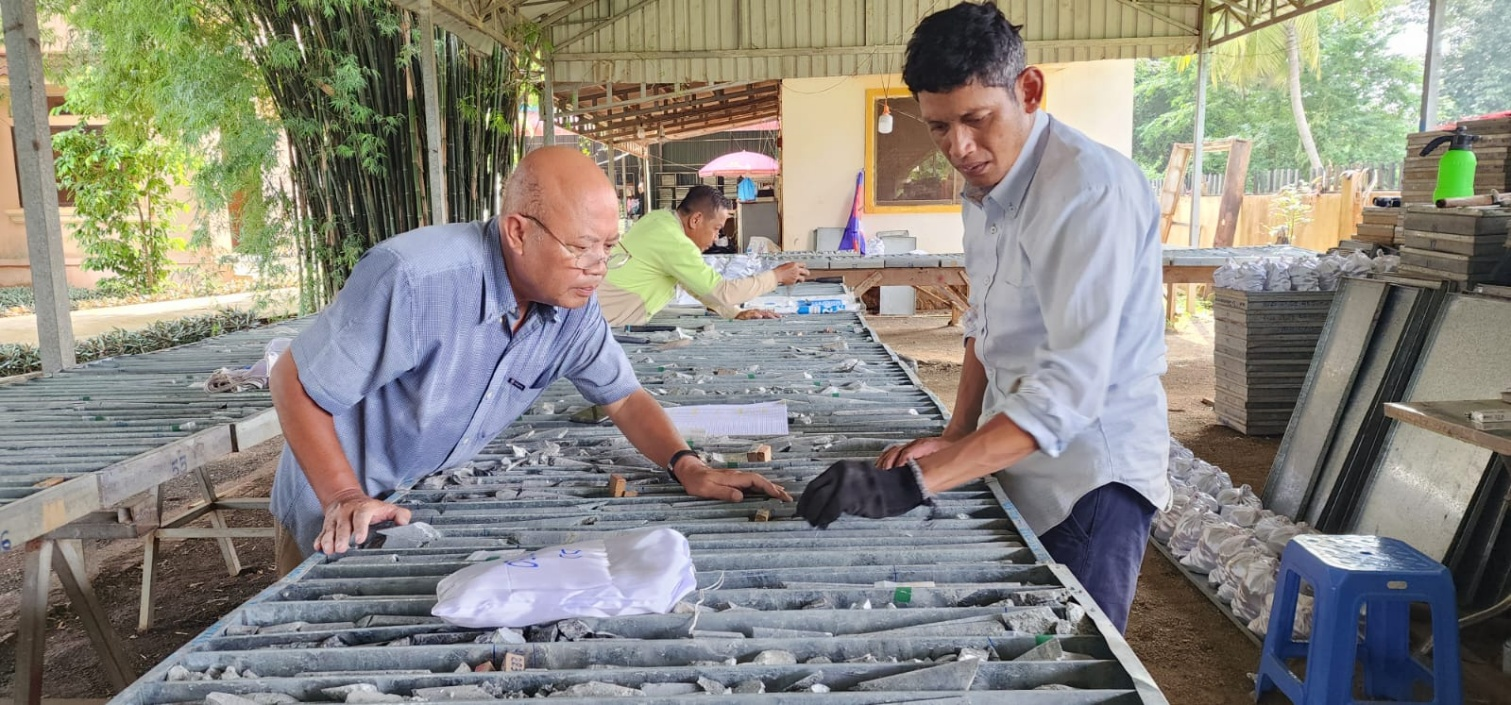
Figure 1: Andong Bor core is assessed in detail by ANK geologists and geotechs.
THE STUDY
The study examined core from the TN drill holes. Beneath approximately 35 meters of topsoil and weathered bedrock, the core passes through diorite — a dense, granite-like intrusive rock — and hornfels — most likely older mudstone and shale, baked hard by the heat of nearby intrusions. Both are cut by several generations of veins, which are cracks filled with minerals deposited by hot fluids. The researchers identified the minerals in and around each vein to work out the order in which the veins formed. They also measured fluid inclusions — microscopic droplets of the original hot fluid sealed inside quartz crystals — which, when reheated in the laboratory, reveal the temperature and salt content of the fluid that formed each vein.
The study does not in any way address the size or grade or economic viability of the TM exploration target or any other target on the Andong Bor exploration license.
STUDY RESULTS
Alteration: Three types of alteration are stacked one above the other at TN (Table 1). Potassic alteration at depth formed from the earliest and hottest fluids and is where most of the copper was deposited. Chlorite-sericite alteration later altered part of the potassic zone, preserving the earlier copper and adding more. Phyllic alteration near the top formed from later, more acidic fluids that appear to have broken down the earlier copper minerals, and this zone appears to lack mineralization.
| Alteration zone | Position | Relationship to copper | Drilling implication |
| Potassic | Deepest | Main copper zone, formed by the earliest and hottest fluids | Primary target |
| Chlorite-sericite | Middle | Preserves earlier copper and adds more | Secondary target |
| Phyllic | Upper | Later acidic fluids appear to have broken down earlier copper minerals; appears to lack mineralization | Less prospective; not a target |
Table 1: Alteration zones at Thmei North and their relationship to copper.
Mineralization: The copper mineral is chalcopyrite, the most common copper ore mineral. It occurs in veins in both the diorite and the hornfels, and is also disseminated — scattered as fine grains — through the diorite. Molybdenite occurs only in B-type veins within the potassic zone. Magnetite and rutile likely formed early in the system, while pyrite — an iron sulphide mineral — dominates the later veins.
Vein sequence: The veins record the system from its hottest stage to its coolest (Table 2). The main copper-bearing veins, including a stockwork — a dense network of small veins — formed at approximately 300 to 415 °C.
| Stage | Vein types | Temperature | Minerals |
| Early | M, EB | Possibly above ~400 °C | Very little quartz; magnetite and rutile likely early |
| Main | QB stockwork, A, B | ~300–415 °C | Most of the chalcopyrite (copper), especially in the QB stockwork; molybdenite in B veins |
| Late | C, QCS, D | Below ~300 °C | Mostly pyrite; additional chalcopyrite with QCS veins |
Table 2: Vein sequence at Thmei North, from earliest to latest.
Fluids: The earliest fluid inclusions are mostly vapor-filled, suggesting low-density, gas-rich fluids at relatively shallow depth. As the system evolved, vapor-filled and liquid-filled droplets were trapped side by side, which is evidence that the fluid was boiling as it rose and the pressure dropped. Tiny mineral crystals inside droplets from the stockwork suggest the early fluid was carrying dissolved metal, consistent with the stockwork holding the most copper. The latest fluids were cooler, mostly liquid, and no longer boiling (Table 3).
| Stage | Temperature | Salt content | Fluid condition |
| Early | 300–415 °C | 2.2–8.3% salt | Gas-rich, then boiling; signs of dissolved metal |
| Late | 185–233 °C | 3.39–6.45% salt | Cooler; mostly liquid; no longer boiling |
Table 3: Temperature and salt content of the vein-forming fluids, measured from fluid inclusions in quartz. For comparison, seawater is about 3.5% salt.
Host rocks: Because hornfels is hard and brittle, it fractures readily and carries more veins than the diorite. The diorite hosts copper in veins and as disseminated grains. Both are considered viable host rocks at TN.
Click Image To View Full Size
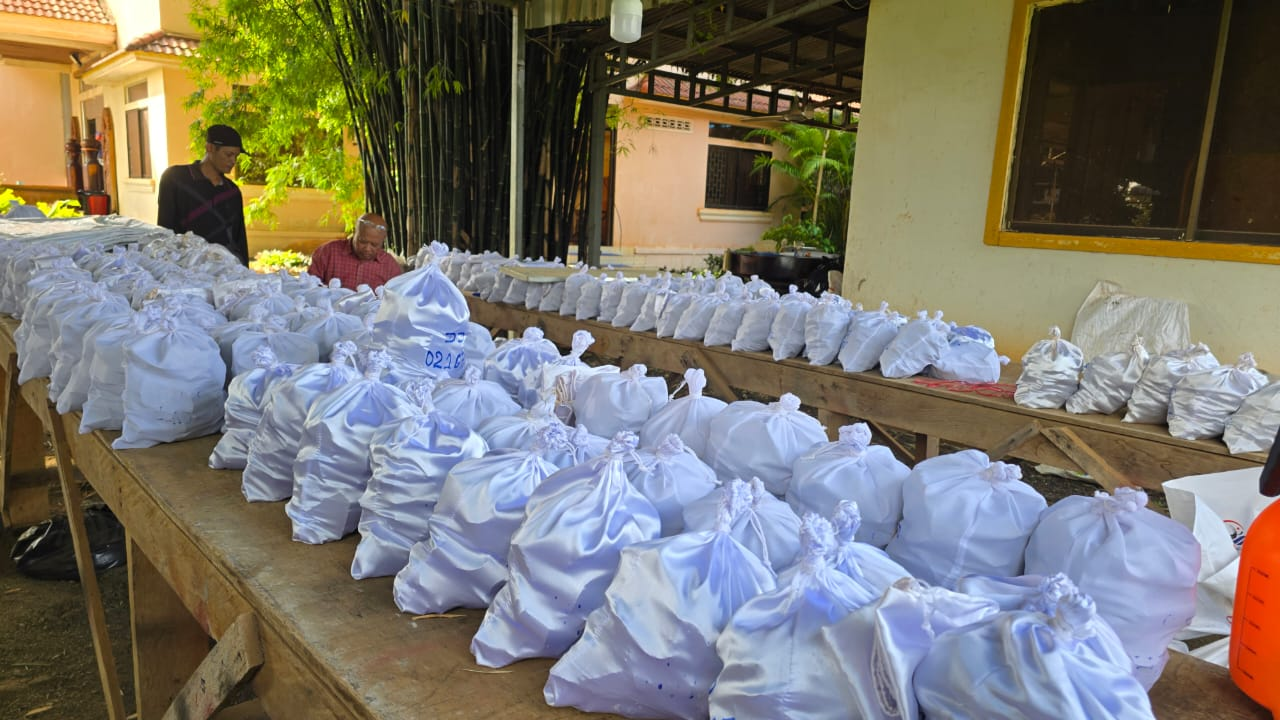
Figure 2 Core samples prepared for sending to ALS laboratory for assay.
THE COMPANY'S OWN ASSAY RESULTS
The study's conclusion that copper is concentrated in potassic-altered rock is consistent with assay results previously reported by the Company from Thmei North drill core (see ANGKOR CONFIRMS 108 METRES OF 0.53% COPPER EQUIVALENT AT ANDONG BOR, CAMBODIA, December 13, 2022):
ABDDH16-005: a 108-meter interval from 282 to 390 meters of predominantly well mineralized potassic-altered mudstone, including a 21-meter interval of crowded porphyry diorite, with a copper equivalent grade of 0.53%*.
ABDDH16-008: a 46-meter interval from 5 to 51 meters of sheeted porphyritic diorite dykes intruding mudstone, both potassic altered and well mineralized with vein and stockwork chalcopyrite, bornite and covellite, with a copper equivalent grade of 0.51%*. This interval includes 4.5 meters of supergene enrichment.
* Copper equivalent was calculated using the formula CuEq = Cu% + (Au g/t x 0.68) with Cu at $8,340/tonne and Au at $57/gram. The extractability of the gold is not considered.
The two holes are 300 meters apart and were drilled within the Thmei North copper-in-soil anomaly.
SAMPLING AND QUALITY CONTROL
Samples of drill core reported by the Company are collected and controlled by the Company and submitted to Australian Laboratory Services ("ALS") for preparation and analysis.
THMEI NORTH: TARGET GEOLOGY (RECAP)
The Andong Bor license is 100.28 square kilometers and straddles Oddar Meanchey and Banteay Meanchey provinces. TN is a copper-in-soil anomaly of approximately one square kilometer, ranging from greater than 300 ppm to 2,100 ppm copper, on flat farmland, within the Loei Fold Belt — a belt of uplifted rocks running through Southeast Asia that hosts gold, skarn and porphyry-type deposits.
Drilling completed in 2025 showed that the main structures controlling mineralization are north-northwest (NNW) striking and steeply west dipping. The holes from drilling in 2026 at TN are therefore being drilled to the east in order to better intersect the mineralized rocks.
NEXT STEPS
The remaining 1,700 meters of the 2,800-meter TN drill program will be drilled in early 2027, following the 1,099 meters completed in mid-July 2026. Holes will continue to be drilled to the east, and the study's alteration model will be used to place them so they pass through the phyllic zone and test the potassic and chlorite-sericite zones at depth. Core from the first phase has been logged and sampled, and now sent for assay. Activity on Thmei South will continue in 2027.
Click Image To View Full Size
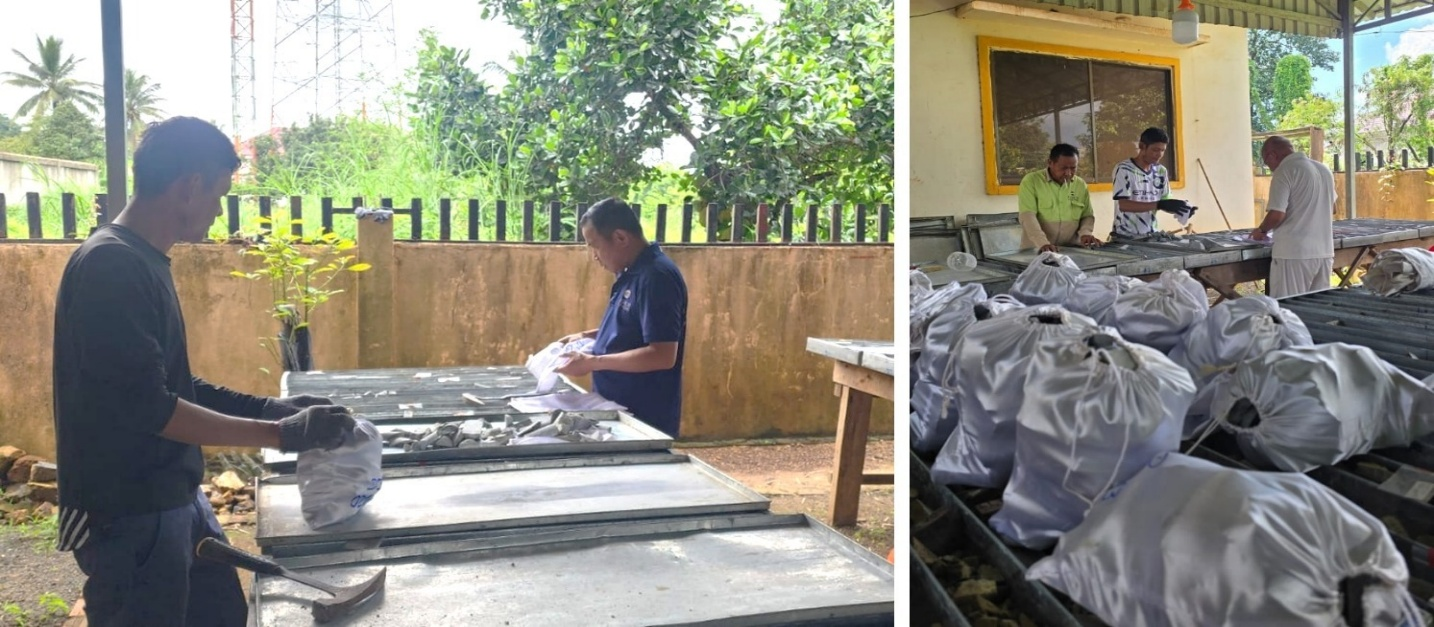
Figure 3: Angkor staff prepare samples from latest drilling at Andong Bor for analysis and assay.
ITC AND KYUSHU UNIVERSITY PARTNERSHIP
The study was led by Sokvireak Say of the Economic Geology Laboratory, Department of Earth Resources, Kyushu University, Fukuoka, Japan and the Faculty of Geo-resources and Geotechnical Engineering at ITC, Phnom Penh Cambodia with Kotaro Yonezu, Akira Imai and Akane Ito of Kyushu University, John C. Menzies of Cmi Capital Limited, and Reach Sam of Angkor Resources. The work continues the partnership between Angkor and ITC and supports the Company's ongoing commitment to building Cambodia's national capacity in geoscience alongside its exploration activities.
QUALIFIED PERSON:
Dennis Ouellette, B.Sc., P.Geo., is a member of The Association of Professional Engineers and Geoscientists of Alberta (APEGA #104257) and a Qualified Person as defined by National Instrument 43-101 ("NI 43-101"). He is the Company's VP Exploration on site and has reviewed and approved the technical disclosure in this document.
NOTE ON THE STUDY:
The study is an academic research study and is not a technical report prepared under NI 43-101. The study describes the alteration, mineralization and ore-forming fluids at Thmei North. The Company has not established a mineral resource on the Andong Bor license.
ABOUT Angkor Resources Corp.
Angkor Resources Corp. is a public company, listed on the TSX-Venture Exchange, and is a leading resource explorer and developer in Cambodia working towards mineral and energy solutions across the country. The Company's mineral subsidiary, Angkor Gold Corp. Co., Ltd., currently holds two mineral exploration licenses in Cambodia with multiple prospects in copper and gold. Both licenses are in their first two-year renewal term.
Angkor's Cambodian energy subsidiary, EnerCam Resources Co., Ltd., was granted an onshore oil and gas license in the southwest quadrant of Cambodia called Block VIII. The license covers an area of approximately 4095 square kilometers. EnerCam is actively advancing oil and gas exploration activities onshore to meet its mission to prove Cambodia as a nation with its own oil and gas resources. The Company completed 2D-seismic in 2025 and has identified multiple drill targets with multiple target zones. The Company plans to follow with drilling Cambodia's first privately financed onshore exploratory oil and gas wells under a Production Sharing Contract.
CONTACT: Delayne Weeks - CEO
Email:- info@angkorresources.com Website: angkorresources.com Telephone: +1 (780) 831-8722
Please follow @AngkorResources on , , , Instagram and .
Neither TSX Venture Exchange nor its Regulation Services Provider (as that term is defined in the policies of the TSX Venture Exchange) accepts responsibility for the adequacy or accuracy of this release.
_____________________________________
Certain information set forth in this news release may contain forward-looking statements that involve substantial known and unknown risks and uncertainties. These forward-looking statements are subject to numerous risks and uncertainties, certain of which are beyond the control of the Company, including, but not limited to oil and gas risks of the seismic interpretation uncertainty and the preliminary nature of structural closure estimates; drilling risk and the absence of a drilled well on the Concession; reservoir and fluid uncertainty; PSC compliance obligations and the risk of relinquishment for non-performance; oil price exposure; and Cambodia-specific sovereign and regulatory risk.
As well, additional uncertainties on the mineral projects exist regarding the potential for gold and/or other minerals at any of the Company's properties, the prospective nature of any claims comprising the Company's property interests, the impact of general economic conditions, industry conditions, dependence upon regulatory approvals, uncertainty of sample results, timing and results of future exploration, and the availability of financing.
Readers are cautioned that the assumptions used in the preparation of such information, although considered reasonable at the time of preparation, may prove to be imprecise and, as such, undue reliance should not be placed on forward-looking statements.

Copyright (c) 2026 TheNewswire - All rights reserved.
News Provided by TheNewsWire via QuoteMedia