The Conversation (0)

Ground radiometrics, soil geochemistry and mapping reinforce the potential for a Rossing-style system beneath shallow cover
ReeXploration Inc. (TSXV: REE) (FSE: K2I0) ("ReeXploration" or the "Company") is pleased to announce results from its uranium field program, which provide strong support for the scale and technical validity of the previously-announced uranium target at the Eureka Project in Namibia. The Company believes the target has the potential to represent a large, under-cover Rössing-style uranium system. A drill program is planned for early 2026 to provide initial testing of the target.
HIGHLIGHTS:
Christopher Drysdale, Interim CEO for ReeXploration, added, "This field program has materially advanced our understanding of the uranium target at Eureka. The strong alignment between airborne radiometrics, ground radiometrics, geology and soil geochemistry provides exactly the type of multi-layered confirmation you want to see before drilling. Namibia is one of the world's most important uranium jurisdictions, and Eureka lies in the same structural corridor that hosts Rössing, Husab, Etango, Omaholo and Norasa. The scale of this anomaly, and the quality of the early technical indicators, point to a meaningful discovery opportunity."
Field Program Results
Four grids across the broad airborne uranium anomalies southwest of the Eureka Dome were defined for follow-up ground investigation (Figure 1). A ground spectrometer survey and soil sampling program were executed by the Company across the four grids. The objectives included obtaining a greater understanding of the nature, cause and extent of the anomalies, and identifying any highly anomalous areas.
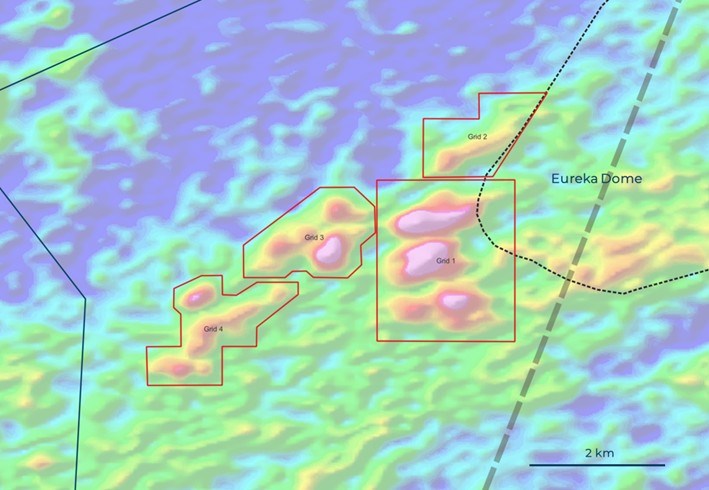
Figure 1: Grids 1 to 4 covering the airborne uranium radiometric anomalies.
To view an enhanced version of this graphic, please visit:
https://images.newsfilecorp.com/files/6102/277795_8e4d6f7a54a09b55_001full.jpg
Ground Spectrometer Survey
A total of 102-line kilometers of ground spectrometer survey was completed across the four grids, with survey lines running east-west and spaced 100 m apart. Overall, a very good correlation was achieved with the airborne radiometric uranium anomalies. The ground surveying highlighted areas of very high anomalism with values up to 2,255 cps. Low radioactivity corresponds with more massive calc-silicate exposure, covered areas, and drainage sediments, whereas high radioactivity corresponds with gypcretes/calcretes overlying leucogranite. Secondary uranium (carnotite) was found in the overburden (sand/sheetwash), as well as in in-situ leucogranite and schist. Sand cover increases to south attenuating radioactive signal (Figure 2).
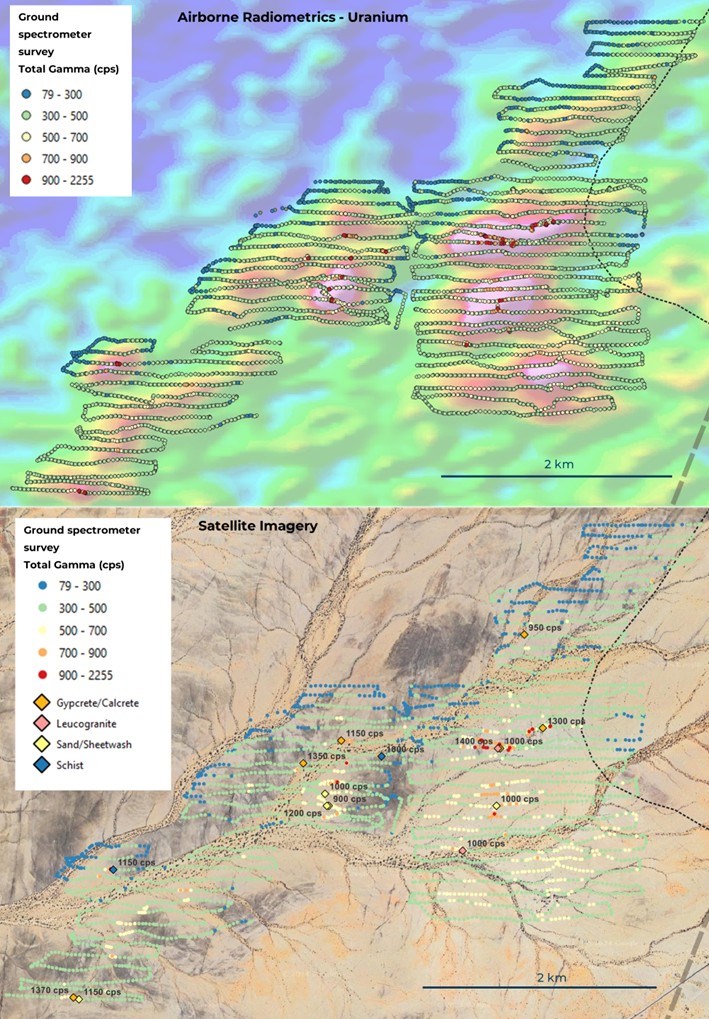
Figure 2: Ground spectrometer survey completed across the four grids.
To view an enhanced version of this graphic, please visit:
https://images.newsfilecorp.com/files/6102/277795_8e4d6f7a54a09b55_002full.jpg
The field spectrometer survey has confirmed the regional scale of the airborne radiometric uranium anomalies. The anomalies relate to widespread uranium mineralization occurring within thin overburden, which is best visible where drainages have incised a regionally occurring gypcrete/calcrete horizon with anomalous values ranging from 300 to 1,500 cps (Figure 3).
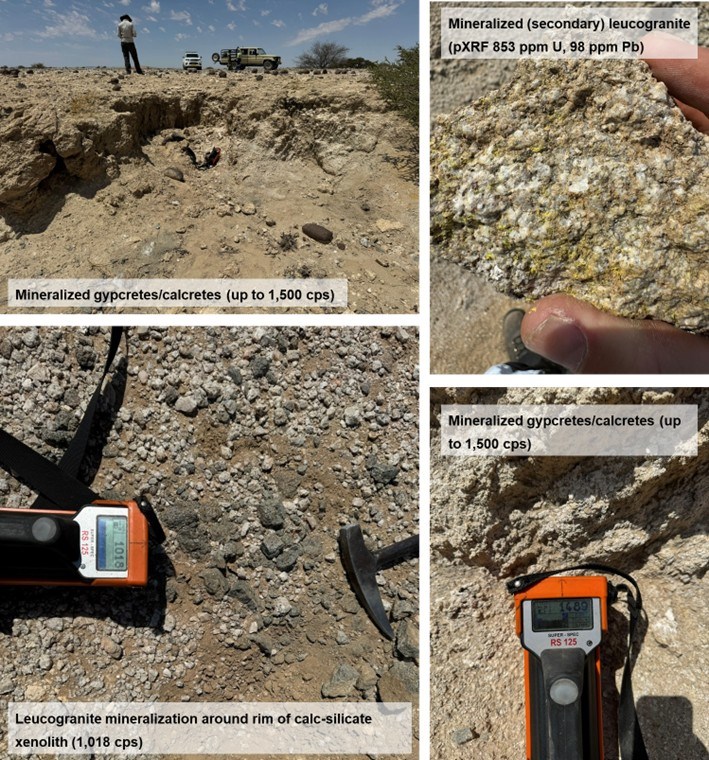
Figure 3: Mineralized leucogranite and gypcrete/calcrete found during reconnaissance field work and the ground spectrometer survey.
To view an enhanced version of this graphic, please visit:
https://images.newsfilecorp.com/files/6102/277795_8e4d6f7a54a09b55_003full.jpg
Soil Sampling pXRF Results
A total of 1,040 soil samples were collected across the four grids at 100 x 100 m spacing and analyzed with the Company's portable XRF. High uranium in soils are evident where secondary uranium (carnotite) was found in gypcrete / calcretes primarily along drainages (Figure 4).
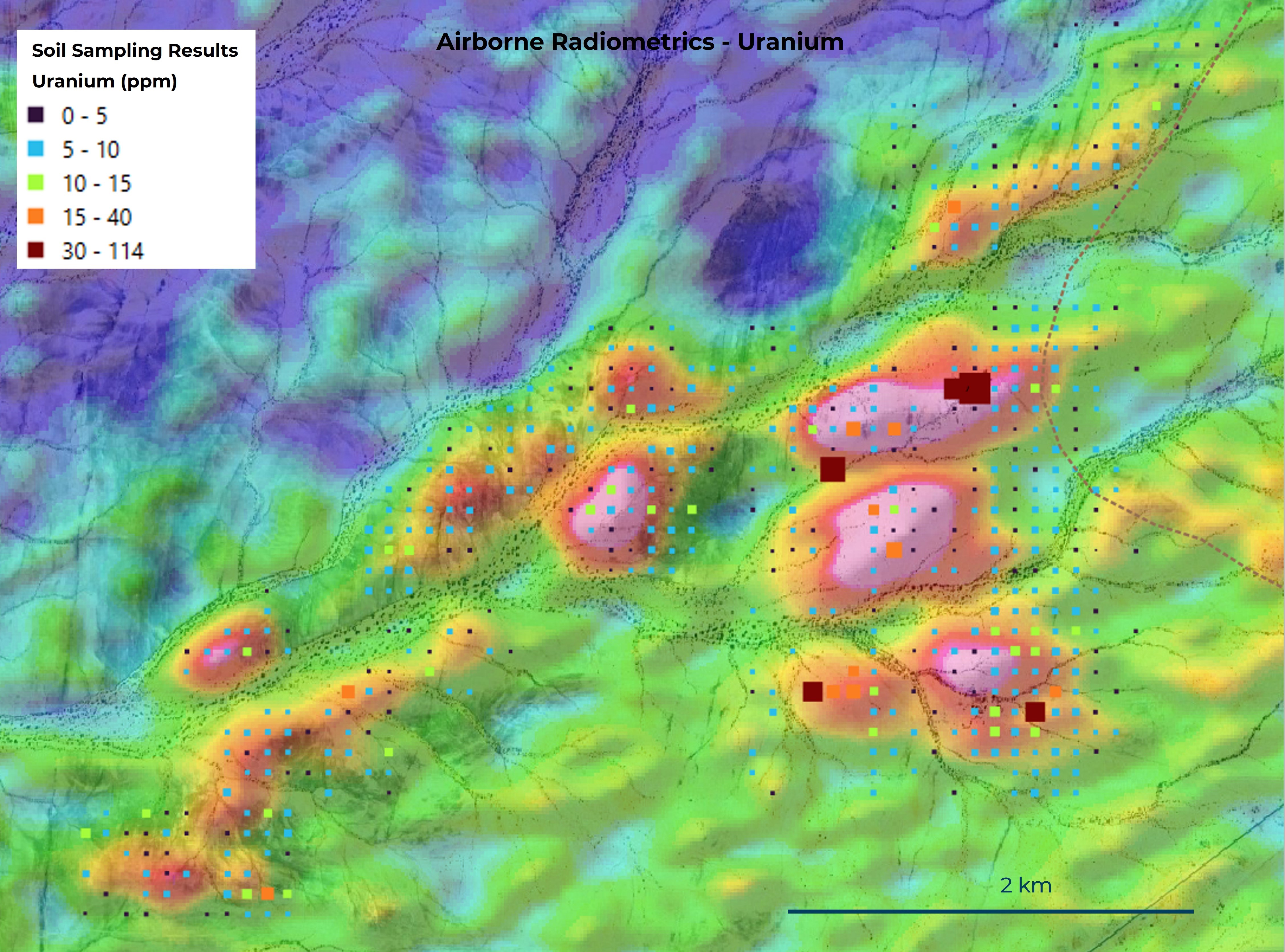
Figure 4: Uranium in soil pXRF results from the soil sampling campaign.
To view an enhanced version of this graphic, please visit:
https://images.newsfilecorp.com/files/6102/277795_8e4d6f7a54a09b55_004full.jpg
Initial Drill Target Areas
Six initial drill target areas have been identified based on coincident; 1) airborne uranium radiometric anomalies, 2) high total gamma (>500 cps) from ground spectrometer survey, 3) uranium in soils (>10 ppm pXRF), and 4) zones of interpreted leucogranites in contact with reactive calc-silicate rocks (Figure 5). The target areas include occurrences of visible secondary uranium mineralization identified within leucogranites and gypcretes/calcretes.
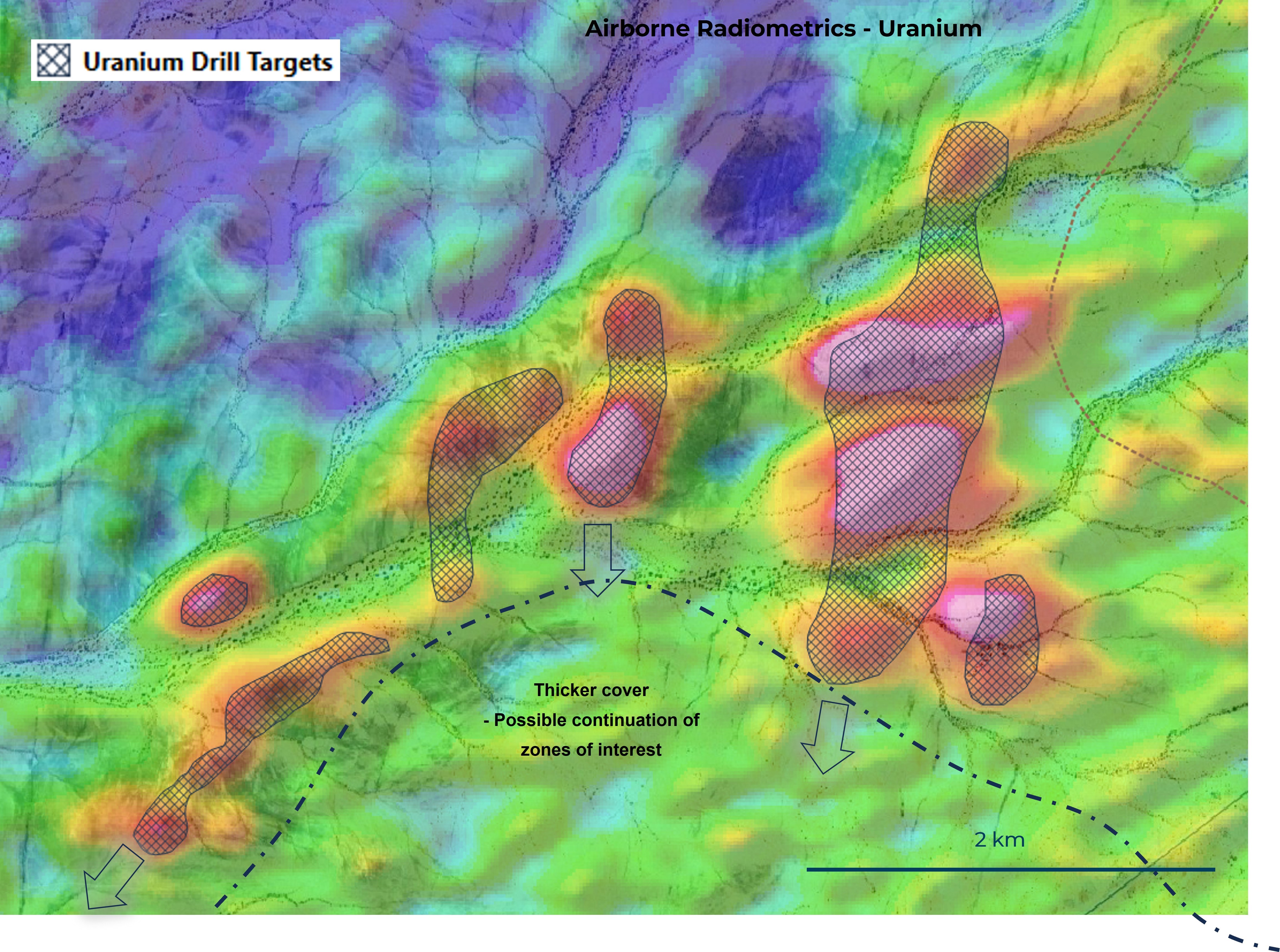
Figure 5: Initial drill target areas.
To view an enhanced version of this graphic, please visit:
https://images.newsfilecorp.com/files/6102/277795_8e4d6f7a54a09b55_005full.jpg
Next Steps: Diamond Drilling Expected to Commence Early 2026
ReeXploration is in the final stages of contractor selection and anticipates mobilizing in early 2026 for a 2,000-metre inaugural diamond drilling program. The program is designed to test for primary uranium mineralization within the leucogranites (Rössing-style model) beneath the weathering profile. Drilling is expected to comprise a series of heel-to-toe drill fences across priority target areas. The initial program is planned to consist of approximately ten holes averaging 200 metres in length. A detailed drilling schedule will be released once mobilization dates are confirmed, and the program remains subject to financing.
Technical Disclosure
Field analysis of rock and soil samples was carried out using a calibrated SciAps X-555 portable X-Ray Fluorescence (pXRF) analyzer. The instrument is capable of detecting uranium providing a rapid, preliminary, and semi-quantitative indication of uranium concentrations which is considered sufficiently reliable for initial reporting of initial field reconnaissance results. Select samples are expected to be verified through uranium assay at an accredited laboratory.
Counts per second ("cps") results were collected using an RS-125 handheld gamma-ray spectrometer. The RS-125 measures natural radioactivity from potassium (K), uranium (U), and thorium (Th), providing real-time counts-per-second (cps) readings that assist in identifying zones of elevated radioactivity and guiding geological mapping and sampling programs. The cps measurements are qualitative in nature and should not be interpreted as equivalent to uranium concentrations obtained through laboratory analysis.
Qualified Person
Tolene Kruger, BSc. (Hons), M.Sc., is a consulting geologist and has reviewed and approved the scientific and technical information in this news release. Mrs. Kruger is registered as Professional Natural Scientist (Pr.Sci.Nat.) with the South African Council for Natural Science Professions (SACNASP, Reg. No.: 148182), and a Qualified Person for the purposes of National Instrument 43-101 - Standards of Disclosure for Mineral Projects.
About ReeXploration Inc.
ReeXploration (TSXV: REE) (FSE: K2I0) is a Canadian exploration company positioned to help meet surging global demand for secure, responsible supplies of critical minerals essential to the clean energy transition, advanced technologies and national defense. The Company's flagship Eureka Project in central Namibia pairs a technically proven rare earth foundation – supported by the production of a clean, Western-standard monazite concentrate – with a newly defined, high-priority uranium target located within one of the world's most established uranium corridors. Together, these commodities provide multi-path discovery potential aligned with accelerating global efforts to diversify critical mineral and nuclear fuel supply. Supported by a Namibia-based technical team and guided by global critical minerals experts, ReeXploration is advancing a disciplined, discovery-led strategy, building a credible, ESG-aligned platform positioned to benefit from the global race to diversify and secure responsible supply chains.
Caution Regarding Forward-Looking Information
This press release may contain forward-looking information. This information is based on current expectations and assumptions (including assumptions relating to general economic and market conditions) that are subject to significant risks and uncertainties that are difficult to predict. Actual results may differ materially from results suggested in any forward-looking information. Exploration does not assume any obligation to update forward-looking information in this release, or to update the reasons why actual results could differ from those reflected in the forward-looking information unless and until required by securities laws applicable to ReeXploration. Additional information identifying risks and uncertainties is contained in the filings made by ReeXploration with Canadian securities regulators, which filings are available at www.sedarplus.ca.
Neither the TSX Venture Exchange nor its Regulation Services Provider (as that term is defined in policies of the TSX Venture Exchange) accepts responsibility for the adequacy or accuracy of this release.
Further details are available on the Corporation's website at www.rareearthexploration.com or contact Christopher Drysdale, Interim CEO of ReeXploration Inc., at +1 902-334-1949, contact@rareearthexploration.com.

To view the source version of this press release, please visit https://www.newsfilecorp.com/release/277795
News Provided by Newsfile via QuoteMedia