The Conversation (0)
- Team from U.S. Department of Energy-funded Quantum Science Center demonstrates quantum computers can perform material simulation that many previously believed to be beyond current quantum capabilities.
- High simulation accuracy is enabled by quantum-centric supercomputing workflows and reductions in hardware error rates.
- Results point toward quantum-centric supercomputing as a new scientific instrument for materials discovery, with long-term implications for superconductors, medical imaging, energy, and drug development.
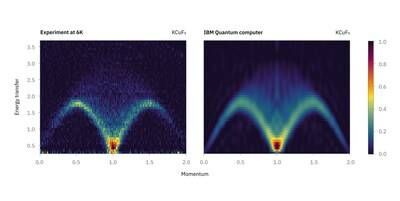
- IBM (NYSE: IBM) today announced new results that its quantum computer can simulate real magnetic materials with results that match neutron scattering experiments, marking a significant step towards using quantum computers as reliable tools for scientific discovery. The work, reported in a pre-print, was conducted by scientists from the U.S. Department of Energy-funded Quantum Science Center at Oak Ridge National Laboratory, Purdue University, University of Illinois Urbana-Champaign, Los Alamos National Laboratory, the University of Tennessee and IBM.
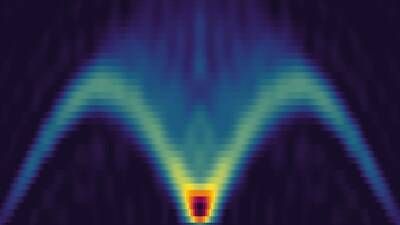
The ability to design new materials—such as better superconductors, more efficient batteries, or novel drugs—depends on understanding quantum behavior that is often challenging for classical methods to model. While quantum computers are expected to address this challenge, it has remained unclear whether today's processors could deliver quantitatively reliable simulations of real materials. These results show that current quantum hardware, combined with new algorithms and quantum-centric supercomputing workflows, can already simulate properties of materials, which in general, can be difficult to predict using classical methods alone.
"There is so much neutron scattering data on magnetic materials that we don't fully understand because of the limitations of approximate classical methods," said Arnab Banerjee, assistant professor of Physics and Astronomy at Purdue University. "Using a quantum computer for better understanding these simulations and comparing experimental data has been a decade-long dream of mine, and I'm thrilled that we have now demonstrated for the first time that we can do that."
The Experiment
Scientists have long used neutron sources to reveal the quantum properties of materials by measuring how incident neutrons exchange energy and momentum with spins in the material. In this study, the team focused on the well-characterized magnetic crystal KCuF3 and directly compared neutron scattering measurements with simulations on a quantum computer. The agreement between experiment and simulation demonstrates that quantum processors can now capture key dynamical properties of real materials. "This is the most impressive match I've seen between experimental data and qubit simulation, and it definitely raises the bar for what can be expected from quantum computers," said Allen Scheie, condensed matter physicist at Los Alamos National Laboratory. "I am extremely excited for what this means for science."
These results begin to establish quantum computers as reliable computational tools for material simulation. "Quantum simulations of realistic models for materials and their experimental characterization is a major demonstration of the impact quantum computing can have on scientific discovery workflows," said Travis Humble, director of the Quantum Science Center at Oak Ridge National Lab.
The study also highlights how improvements in the scale and quality of quantum processors were crucial for the simulation accuracy achieved. "These results were really enabled by the two-qubit error rates that we can now access on our quantum processors," said Abhinav Kandala, principal research scientist at IBM. "We expect further improvements in error rates and extensions to higher dimensions to enable predictions of material properties that are challenging for classical methods alone." Leveraging the programmability of a universal quantum processor, the team has already extended the approach beyond KCuF₃ to simulate material classes with more complex interactions.
Building Toward the Quantum Era
This experiment is part of a broader shift in how quantum computers are being applied toward scientific problems defined by laboratories. Recent results include the first quantum simulation of a never-before-seen in nature half-Möbius molecule and a large-scale protein simulation with Cleveland Clinic. Across chemistry, materials science, and molecular biology, quantum simulation is beginning to engage with problems that matter to scientists.
The quantum-centric supercomputing approach demonstrated here is designed to deliver scientific and commercial value by combining today's quantum hardware with classical computing in workflows that make productive use of both.
Read more about IBM's quantum-centric supercomputing work here.
About IBM
IBM is a leading global hybrid cloud and AI, and business services provider, helping clients in more than 175 countries capitalize on insights from their data, streamline business processes, reduce costs and gain the competitive edge in their industries. Thousands of governments and corporate entities in critical infrastructure areas such as financial services, telecommunications and healthcare rely on IBM's hybrid cloud platform and Red Hat OpenShift to effect their digital transformations quickly, efficiently and securely. IBM's breakthrough innovations in AI, quantum computing, industry-specific cloud solutions and business services deliver open and flexible options to our clients. All of this is backed by IBM's legendary commitment to trust, transparency, responsibility, inclusivity and service.
For more information, visit https://research.ibm.com.
Media Contacts:
Erin Angelini
IBM Communications, edlehr@us.ibm.com
Danielle Cerasani
IBM Communications, dcerasani@ibm.com


 View original content to download multimedia:https://www.prnewswire.com/news-releases/ibm-quantum-computer-accurately-simulates-real-magnetic-materials-reproducing-national-laboratory-data-302725427.html
SOURCE IBM

 View original content to download multimedia: http://www.newswire.ca/en/releases/archive/March2026/26/c2768.html