The Conversation (0)

Independent review of Iceland Demonstration Facility operating data supports the potential for Syntholene to achieve lower direct production costs than conventional fossil-derived fuels under favourable commercial operating conditions.
Syntholene Energy Corp. (TSXV: ESAF) (OTCQB: SYNTF) (FSE: 3DD0) ("Syntholene" or the "Company") announced today the results from the previously announced independent technical review (the "Independent Review") by Prof. Nigel Brandon of Imperial College London, of the operating data from Syntholene's geothermally-integrated solid oxide electrolyzer cell ("SOEC") demonstration facility in Húsavík, Iceland (the "Demonstration Facility"). Prof. Brandon presented the findings of the Independent Review in a written report dated October 19th, 2026 (the "Report"). The Independent Review was undertaken via Imperial Consultants and funded by Syntholene.
The Report concluded that "the Syntholene Iceland Demonstration Facility has achieved proof-of-performance for its geothermally integrated SOEC. The results represent world class efficiency, operation on fully green power and heat, and the opportunity to produce cost competitive green aviation fuel given favourable commercial operating conditions."
"It is no secret that synthetic fuels have a cost problem. Syntholene has now demonstrated a pathway to overcoming that problem," said Dan Sutton, Chief Executive Officer. "With demonstration-scale proof-of-performance now established, our focus shifts to commercial operations that can increasingly challenge the economics of conventional fossil fuels."
Key Technical Achievements Confirmed by the Independent Review
World Class Electrical Efficiency: Average stack electrical consumption of 34.90 kilowatt-hours per kilogram of hydrogen (kWh/kg H₂), equivalent to 95.5% electrical efficiency on a lower heating value ("LHV") basis. Reported stack and SOEC auxiliary electrical consumption excluding steam generation was 38.60 kWh/kg H₂.
Sustained Performance: The efficiency results were demonstrated and achieved over the 713 Phase Two high-load hours. The wider campaign comprises 2,520 hourly records, including commissioning and shutdowns, a longest uninterrupted selected-load run of 795 hours, and a total selected-load runtime of 1,478 hours over the two phases.
Further Performance Metrics Based on Syntholene Internal Analysis
Baseload Production Consistency: Hydrogen production exceeded 90% of the defined high-load reference output during 97.7% of the 732-hour Phase Two observation period. The coefficient of variation in hourly mean voltage across the nine active stacks was 0.248%, indicating the geothermal power supply was stable, uninterrupted, and robust at baseload consistency.
Improving Performance Over Time: The Demonstration Facility produced approximately 60% higher hydrogen output and 10.5% lower system electricity consumption per kilogram of hydrogen during Phase Two compared with Phase One.
Implications of Key Technical Achievements
The Independent Review confirmed that over the course of the effects testing campaign, the Demonstration Facility achieved stack electrical consumption of just 34.90 kilowatt-hours per kilogram of hydrogen produced (kWh/kg H₂), equivalent to 95.4% electrical efficiency on a lower heating value (LHV) basis, across its high-load operation phase.
The Independent Review also confirmed that the Demonstration Facility recorded SOEC system electrical consumption of 38.60 kWh/kg H₂ excluding steam generation, which represents electrical efficiencies competitive with the highest of all identified systems with publicly available and sufficiently comparable performance data.
In the Report Prof. Brandon concluded that the results from the effects testing campaign at the Demonstration Facility represent proof-of-performance of Syntholene's thermally-integrated hydrogen production architecture in the field. Prof. Brandon's Independent Review further confirmed that, by combining high-efficiency solid oxide electrolysis with geothermal heat and electricity, Syntholene has demonstrated reduced electrical energy consumption and favorable hydrogen production costs under field operating conditions.
The Company believes that the Independent Review provides empirical support for Syntholene's structural cost advantage compared to traditional electrolysis pathways, and represents a significant step in the Company's journey to becoming a leading low-cost producer of hydrogen and synthetic fuels.
Sytholene's Structural Cost Advantage
Prof. Brandon's Independent Review provides further support for Syntholene's planned approach to hydrogen and synthetic fuel production. Syntholene believes its ability to integrate geothermal heat and electricity with hydrogen and synthetic fuel production can provide multiple complementary advantages. These advantages include substituting geothermal heat for electricity, accessing reliable baseload energy to support high plant utilization, reducing or eliminating costly battery and hydrogen buffer storage requirements, and utilizing otherwise stranded geothermal resources that may offer power at competitive rates while generating accretive revenue for existing geothermal powerplant operators.
These advantages are inherent to the Company's production architecture. Thus they provide an empirical technical foundation for a structural cost advantage, not reliant on government subsidies, prevailing electricity prices, or rebates, over hydrogen and synthetic fuels produced with intermittent renewables or grid power integrated to traditional low temperature electrolysis.
The extent to which these advantages translate into lower capital expenditures, commercial operating efficiencies, and improved synthetic fuel production unit economics will depend on a number of factors including site-specific conditions, commercial arrangements, and successful scale-up.
The Company intends to preserve and extend these demonstrated advantages through commercial-scale deployment and integration into downstream synthetic fuel production. The Company anticipates that further efficiencies can be realized as commercial production architecture builds on the learnings from the effects testing campaign.
Technical Basis and Scope of Independent Review
The Independent Review was undertaken by Prof. Nigel Brandon, OBE, FREng, FRS, Professor of Sustainable Development in Energy, and previous Dean of the Faculty of Engineering, at Imperial College London, via Imperial Consultants and funded by Syntholene. The Independent Review examined approximately 2520 hours of performance data gathered from the Demonstration Facility's effects testing campaign which commenced on June 22nd.
Syntholene engaged Imperial Consultants, a wholly owned subsidiary of Imperial College London, to conduct an independent technical review of operational data from its demonstration facility, for a fixed cash fee of £27,500, consistent with customary industry rates for comparable technical consulting services. Neither Imperial Consultants nor PRof. Nigel Brandon received any shares, stock options, warrants, performance-based compensation, or other incentives in connection with the engagement. Compensation was limited to the agreed fixed fee and was not contingent upon the findings or conclusions of the review.
During the Independent Review, Prof. Brandon examined, among other things, the electrical consumption per kilogram of hydrogen produced, projected commercial system efficiency including balance-of-plant electrical loads, operational stability, capacity factor, and variability. Prof. Brandon also examined whether there was evidence of degradation in the SOEC stack and heat-exchange system over the available operating period.
The Independent Review was completed via a comprehensive review of the stack and system performance data collected by the Company during the effects testing campaign, a review of various concept design reports made available by the Company, virtual meetings between Prof. Brandon and members of the Company's management team, and a virtual inspection of the Demonstration Facility. Such inspection showed all the sub-system components in operation.
Hydrogen production was calculated from recorded net current, assuming 100% Faradaic efficiency, rather than independently metered product flow. Electrical efficiency is reported on a lower heating value (LHV) basis and excludes thermal energy inputs. The reported 38.60 kWh/kg H₂ SOEC system consumption excludes steam generation and geothermal circulation requirements, which are not anticipated for commercial deployment.
Production continuity was assessed by the time spent at the controlled-current operating point: 90 Amps per stack in Phase One and 160 Amps per stack in Phase Two. On this basis, production continuity was 795 hours in Phase One and, at the time of Report writing, 735 hours in Phase Two.
The Review found no degradation in the stack voltage data. Separately, SOEC vendor Dynelectro reported a stack durability record of 0.05% degradation per 1,000 hours over a 25,000-hour laboratory testing campaign (Nature), which the Report identified as "impressive performance".
The Independent Review also identified stable geothermal heat-exchanger performance, with no evidence of fouling or material performance loss.
The Independent Review establishes technical proof-of-performance and identifies a potential pathway to cost-competitive synthetic aviation fuel. Its economic analysis indicates that hydrogen and carbon dioxide feedstock costs could fall sufficiently below conventional fossil jet fuel prices to accommodate additional direct operating expenses under favourable commercial conditions. Management believes industrial-scale deployment, geothermal integration, and potential non-dilutive capital funding could further strengthen this advantage.
The Report is an independent technical report and should not be used as the basis for any investment decisions. The observations and conclusions in the Report are the author's own and do not represent the views of Imperial College London. Actual commercial production costs remain subject to a number of factors, including engineering, operating conditions, and successful scale-up.
About Syntholene
Syntholene is actively commercializing its novel Hybrid Thermal Production System for low-cost clean fuel synthesis. The target output is ultrapure synthetic jet fuel, which the Company seeks to manufacture as a low cost producer leveraging its unique and structural cost advantage. Founded by experienced operators across advanced energy infrastructure, nuclear technology, low-emissions steel refining, process engineering, and capital markets, the Company's mission is to be the first to deliver high-performance, low-cost, and carbon-neutral synthetic fuel at an industrial scale, thereby unlocking the potential to produce clean synthetic fuel at lower cost than fossil fuels.
Syntholene achieved proof-of-performance at the world's first geothermally-integrated high temperature electrolysis demonstration facility in Husavik, Iceland, in Q4 2026. An independent review of the facility's operating data supports the potential for Syntholene to achieve lower direct production costs than conventional fossil-derived fuels under favourable commercial operating conditions.
For further information, please contact:
Dan Sutton, CEO
comms@syntholene.com
www.syntholene.com
+1 608-305-4835
X: @Syntholene
Linkedin: Syntholene Energy
Youtube: Syntholene Energy
Investor Relations
KIN Communications Inc.
604-684-6730
ESAF@kincommunications.com
Neither TSX Venture Exchange nor its Regulation Services Provider (as that term is defined in policies of the TSX Venture Exchange) accepts responsibility for the adequacy or accuracy of this release.
Forward-Looking Statements
This news release contains forward-looking statements within the meaning of applicable securities laws. The use of any of the words "expect", "anticipate", "aims", "continue", "estimate", "objective", "may", "will", "project", "should", "believe", "plans", "intends" and similar expressions are intended to identify forward-looking information or statements. All statements, other than statements of historical fact, including but not limited to statements regarding potential implications of the results of the effects testing campaign and the findings of the Review, the Company's structural cost advantage and the preservation, extension and strengthening thereof, potential efficiencies that can be realised by the Company, the Company's becoming a leading-low cost producer of hydrogen and synthetic fuels and the timing thereof, the Company's planned approach to hydrogen and synthetic fuel production, the projected market for synthetic sustainable aviation fuel, projected synthetic sustainable aviation fuel production costs, the Company's ability to execute on its plans for advancement and commercialization of its technology, technical and economic viability, anticipated benefit of eFuel, and future commercial opportunities are forward-looking statements.
The forward-looking statements and information are not a guarantee of future performance and are based on certain key expectations and assumptions made by the Company, including without limitation the assumption that the Company will be able to execute its business plan in the manner and timeline set forth in its public disclosure or at all, that the Company's demonstration facility will operate as expected, that the Company will be able to realize, preserve and expand its structure cost advantage as expected or at all, that the eFuel will have its expected benefits, that there will be market adoption, that the Company's review of the competitive landscape and that its understanding of efficiencies of other SOEC systems and being the world's first Company to have geothermal-SOEC integration remain accurate, that the Company's review of the regulatory landscape remains accurate, that any potential competitors to the Company would not be able to develop or execute geothermal-SOEC integration as quickly or as well as the Company, that the Company will be able to produce the eFuel at competitive pricing, or at all, that the results from the testing and independent review thereof are accurate and complete, that geothermal heat will be available to the Company at the necessary levels, that the Company will continue to have access to skilled personnel with relevant experience, that regulatory requirements remain favourable for the Company and that the Company will be able to access financing as needed to fund its business plan. Although the Company believes that the expectations and assumptions on which such forward-looking statements and information are based are reasonable, undue reliance should not be placed on the forward-looking statements and information, which only applies as of the date of this news release, and no assurance can be given that such events will occur in the disclosed time frames or at all or that such information will prove to be correct. Since forward-looking statements and information address future events and conditions, by their very nature, they involve inherent risks and uncertainties.
Actual results could differ materially from those currently anticipated due to a number of factors and risks, including, without limitation, Syntholene's ability to operate its demonstration facility as anticipated or at all, that the results of the testing are not indicative of results at commercial scale, that the market for synthetic sustainable aviation fuel may not develop as anticipated, that the engaged service providers do not have the necessary skills to and do not advance the Company's business plan, that there are competitors in geothermal-SOEC integration that are unknown to the Company, that the Company may not be able to produce eFuel at the targeted prices or at a price that is lower than potential competitors, the reliability of third party information, that definitive commercial purchase orders for Syntholene's eFuel may not materialize, Syntholene's ability to meet production targets, realize projected economic benefits, overcome technical challenges, secure financing, maintain regulatory compliance, manage geopolitical risks, and successfully negotiate definitive terms as well as those risks and factors disclosed in the Company's financial statements and management's discussion and analysis as well as other public filings on SEDAR+ (www.sedarplus.ca). The Company disclaims any intention or obligation to update or revise any forward-looking information, whether as a result of new information, future events or otherwise, other than as required by law. Readers are advised to exercise caution and not to place undue reliance on the forward-looking statements in this news release.

To view the source version of this press release, please visit https://www.newsfilecorp.com/release/319882
News Provided by TMX Newsfile via QuoteMedia


Advancing high-performance synthetic fuels at scale
Syntholene Energy is advancing a proprietary synthetic fuel production platform designed to produce high-performance, low-cost synthetic hydrocarbons using renewable electricity, geothermal heat and captured carbon. Following successful prototype-scale validation in 2022, the company is now operating its Iceland demonstration facility as it plans commercial-scale production capable of serving aviation, transportation, industrial energy and other hard-to-abate fuel markets.
Syntholene Energy ((TSXV:ESAF,FSE:3DD0, OTC:SYNTF) is a synthetic fuel production company company focused on developing high-performance, low-cost synthetic liquid fuels. The company is commercializing its proprietary Hybrid Thermal Production System, which combines renewable electricity, geothermal heat, water and captured carbon to produce synthetic hydrocarbons that can serve as direct replacements for conventional petroleum-derived fuels.
Unlike many alternative energy solutions that require extensive changes to existing infrastructure, synthetic fuels can be transported, stored and utilized through today’s fuel supply chains. The resulting fuels are molecularly pure, free from many contaminants associated with conventional fuels and compatible with existing engines, turbines, storage systems and transportation infrastructure. Produced using renewable electricity, hydrogen and captured carbon, the fuels can deliver over 90 percent lower lifecycle emissions while maintaining the energy density and performance characteristics required across multiple industries.
At the core of the company’s platform is its Hybrid Thermal Production System, which combines high-temperature solid oxide electrolysis with industrially proven fuel synthesis reactors. By incorporating low-cost thermal energy into critical production stages, Syntholene seeks to reduce electricity consumption, the largest cost component for most eFuel producers. This approach underpins the company’s targeted 70 percent cost advantage relative to competing technologies and supports its objective of producing cost-competitive synthetic fuels at commercial scale.
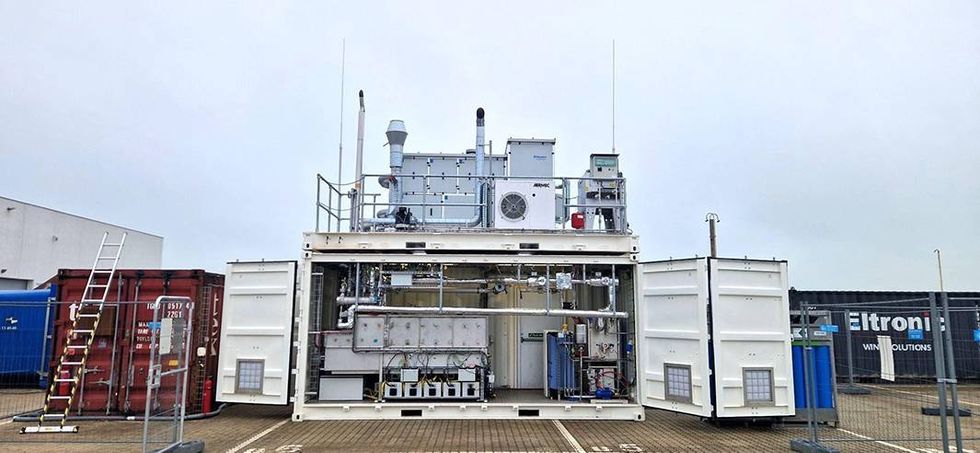
The technology builds upon advancements in high-temperature electrolysis, including work undertaken at Idaho National Laboratory. Following successful prototype-scale validation in 2022, Syntholene is progressing toward field-scale demonstration in Iceland. The company believes a successful demonstration will support future commercial deployment across a range of synthetic fuel applications.
Market demand for low-emission liquid fuels continues to expand across multiple sectors. Sustainable aviation fuel represents Syntholene’s initial commercial focus, supported by increasing airline decarbonization commitments, regulatory mandates, and fuel-blending requirements. Beyond aviation, the broader global eFuel market is projected to grow from US$8.89 billion in 2024 to more than US$215 billion by 2032, creating opportunities across transportation, shipping, industrial energy, and other sectors that depend on liquid hydrocarbon fuels.
Syntholene’s leadership team combines expertise across climate technology, synthetic fuels, industrial engineering, energy infrastructure, project development and resource industries. Recent additions to the advisory board, including former Shell and Suncor executive Marc Mageau and energy industry veteran HY Lee, further strengthen the company’s capabilities as it advances toward commercialization.
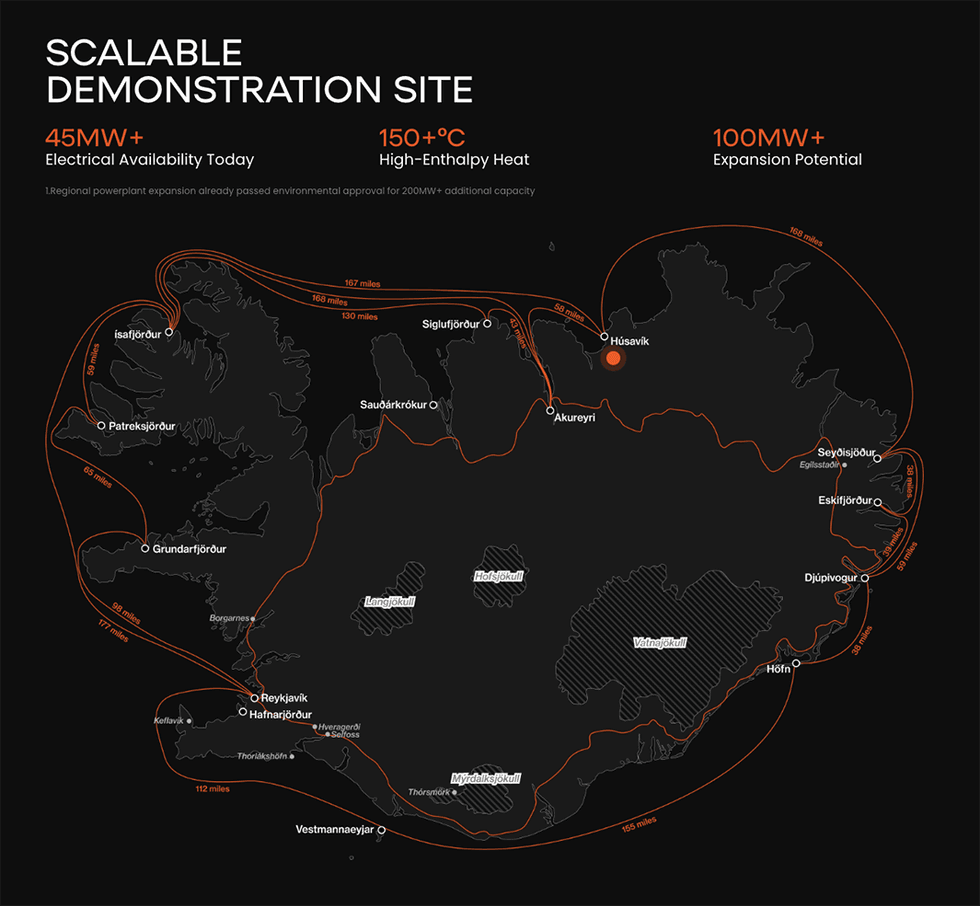
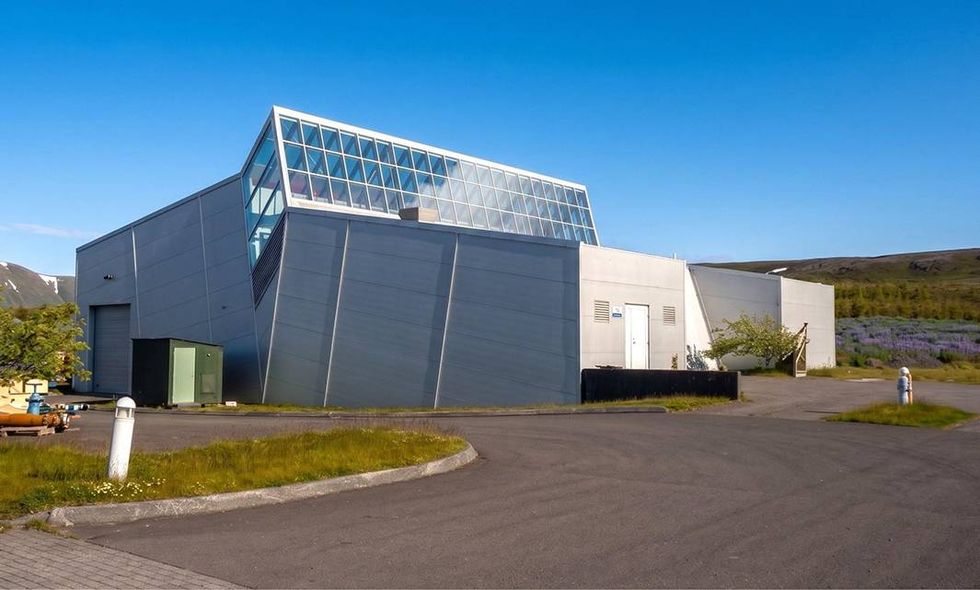
Syntholene’s flagship project is its geothermal-integrated demonstration facility located in Húsavík, northern Iceland. The facility is designed to validate the integration of geothermal heat, high-temperature solid oxide electrolysis and synthetic fuel production technologies under real-world operating conditions. Construction has advanced six months ahead of schedule, with first operations initiated on June 22nd 20266 and efficiency and technoeconomic results expected in Q4 2026.
The project leverages northern Iceland’s abundant geothermal resources, providing access to both low-cost electricity and high-temperature steam. Unlike intermittent renewable energy sources, geothermal energy offers reliable baseload power and thermal energy that can be utilized continuously throughout the fuel production process. The location also benefits from established industrial infrastructure, a skilled workforce, proximity to a deep-water port and a favorable regulatory environment.
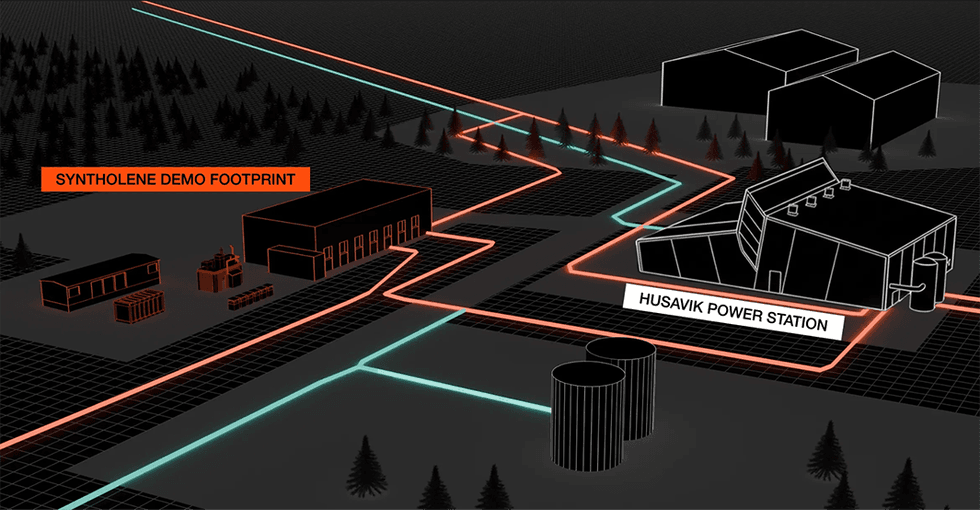
A key objective of the demonstration facility is to validate the company’s thermal integration strategy and confirm that efficiencies achieved during laboratory and prototype testing can be replicated under commercial operating conditions. The facility incorporates Syntholene’s proprietary Thermal Coupling technology, which converts geothermal steam into high-purity industrial steam suitable for use throughout the fuel production process. Management believes this technology is central to achieving the targeted 70 percent cost advantage relative to competing synthetic fuel pathways.
The project also benefits from significant expansion potential. Iceland has completed environmental permitting associated with a 200 MW regional grid expansion, supporting future industrial development in the region. Following a successful demonstration, Syntholene intends to advance a 20,000-tonne-per-year commercial facility design and subsequently scale production through facilities ranging from tens to hundreds of megawatts. Management believes the Húsavík location alone has the potential to support development capable of generating approximately US$500 million in annual revenue.
Dan Sutton has spent the last 15 years founding and leading sustainable infrastructure businesses. As founder and CEO of Tantalus Labs, he designed, built and operated SUNLAB, scaled the company to 150 employees and grew annual revenue to approximately US$20 million. His expertise spans infrastructure deployment, project development, government relations, public markets and executive leadership.
Steve Oldham is a globally recognized leader in carbon management and climate technology commercialization. As former CEO of Carbon Engineering, he helped establish direct air capture as a commercial industry and led the company through its acquisition by Occidental Petroleum at a US$1.6 billion valuation. He currently serves as CEO of Captura.
Canon Bryan is a founder and company builder with more than 25 years of experience across advanced energy and resource development. He co-founded Terrestrial Energy, Uranium Energy and NioCorp and brings expertise in finance, corporate development, economic modelling and strategic planning.
John Kutsch leads the integration and optimization of Syntholene’s fuel production platform. He brings more than 30 years of experience across industrial systems design, chemical processing, advanced energy technologies and reactor development, including work supporting high-temperature synthetic fuel systems.
Jack Williams specializes in high-temperature and high-pressure reactor systems and synthetic fuel technologies. His research at the University of Cambridge focused on electrolysis systems, catalytic reactor design, CO₂ capture and synthetic fuel production processes.
Grant Tanaka has more than 15 years of senior financial leadership experience across the global natural resources sector. His background includes senior finance roles at Teck Resources, New Gold and Copper Mountain Mining, combining financial discipline with operational performance management. He was also appointed Corporate Secretary in May 2026.
Anna Pagliaro is a senior commercial and risk management executive with extensive experience across the energy and mining sectors. Her career includes leadership positions at Vizsla Silver, Ausenco, NexGen Energy and Integra Gold, where she focused on governance, commercial strategy, negotiations and risk management.
Marc Mageau joined the Advisory Board in June 2026. He brings more than three decades of operational leadership experience from Shell and Suncor, including expertise in refining, oil sands operations, logistics, infrastructure development and industrial asset management.
HY Lee joined the Advisory Board in May 2026, adding further industrial, operational and strategic expertise as Syntholene advances toward commercial deployment of its synthetic fuel platform.